
Loopcon Technologies

Laravel

Dignet - A Complete Cloud-Based Business Management System for Construction Companies

Project Overview

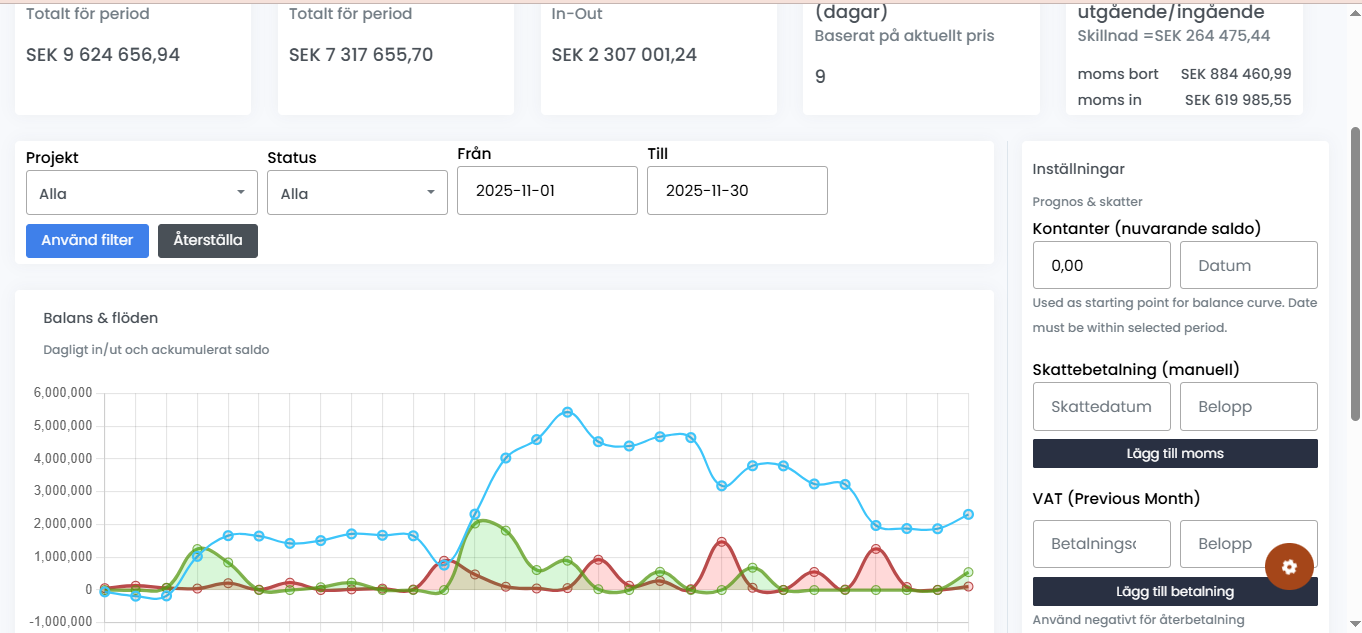
Dignet is an ERP-based digital platform designed to simplify and automate construction business processes.

It integrates project management, documentation, finance, and client coordination into a single centralized solution.

The system enhances transparency, reduces manual effort, and provides accurate insights through real-time tracking and intelligent automation.

Key Functional Highlights:

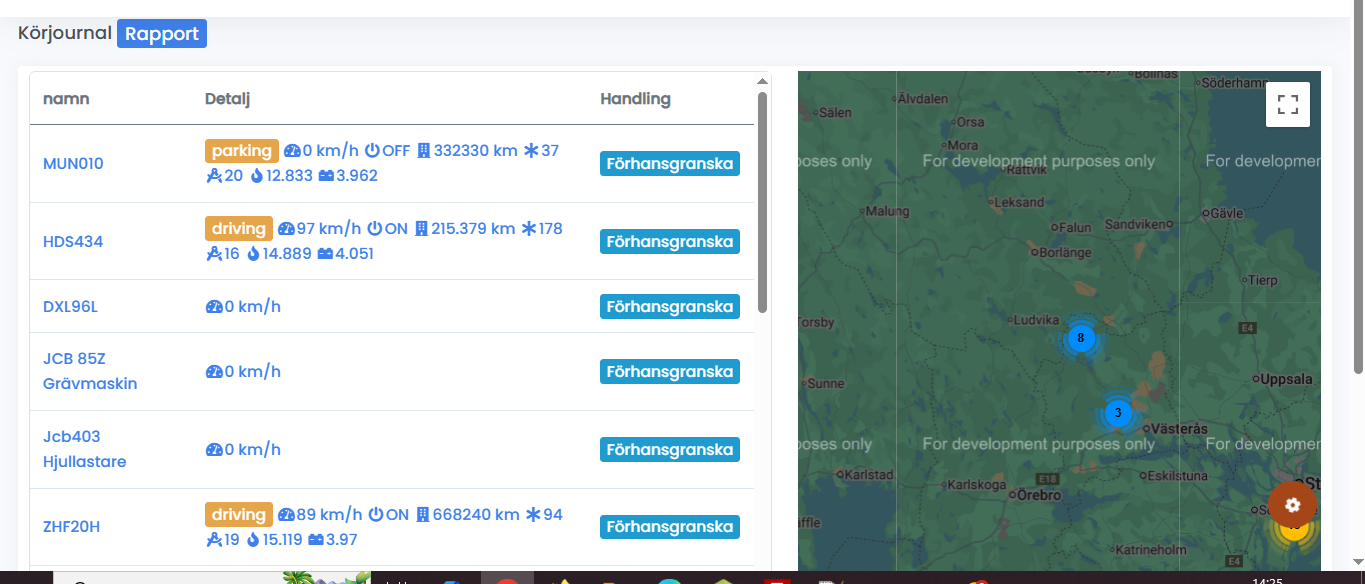
  • Live Vehicle Tracking (GPS) – Enables real-time visibility of vehicles and equipment through Navirec GPS integration.
  • Project Document Management – Digitally manages all documents with version control.
  • Workers’ Hours Tracking – Records on-site attendance and working hours automatically.
  • Data Synchronization via APIs – Integrates with third-party systems such as Visma and Fortnox for accounting and financial data synchronization, ensuring accurate and consistent information across all platforms.
  • AI Implementation – Offers predictive analytics and operational optimization.
  • Customer Membership – Maintains client profiles and loyalty information.
  • Live Signature Integration – Allows instant approvals using third-party APIs.

Framework: Laravel (PHP)

Database: MySQL

API: Restful architecture

Authentication: Laravel Sanctum

Third-Party Integrations: GPS, AI, Signature APIs

Deployment: AWS instance

Version control: Git & Github

Company Background

  • Construction organizations often face challenges managing multiple projects, teams, and data sources simultaneously.
  • Traditional paper-based workflows lead to miscommunication, data duplication, and inefficient resource utilization.
  • Dignet was developed to transform these operations into a unified, digital environment connecting site staff, office teams, and management.
  • The platform strengthens coordination, improves accountability, and ensures effective project monitoring.

Project Objectives

The project aims to develop a reliable and secure digital solution that automates the management of construction-related operations and workflows.

Key Objectives:

  • Build a scalable system architecture for smooth business operations.
  • Implement multi-company access control with distinct user roles.
  • Automate reporting, data validation, and approval workflows.
  • Enable live GPS tracking and worker time management.
  • Integrate third-party APIs for synchronization and digital signatures.
  • Incorporate AI modules for cost prediction and performance analysis.
  • Enhance overall productivity through workflow automation.

System Overview

The system functions through interconnected modules that exchange information in real time using API-based communication.

It is structured using modular architecture principles to ensure data integrity, performance efficiency, and security.

Workflow Overview:

  • Users log in through a secure authentication system.
  • Requests are validated by middleware and processed by backend controllers.
  • Data is securely stored, updated, and retrieved from the database.
  • Third-party integrations, such as GPS or AI, provide real-time data exchange.
  • The frontend displays results through dashboards and analytics reports.
  • Logs are maintained for auditing and activity tracking.

System Workflow

  • 1

    User logs in securely using authentication credentials.

  • 2

    The user performs actions such as data entry, project updates, or report generation.

  • 3

    Backend validation ensures only authorized data operations are performed.

  • 4

    The database processes transactions and returns updated information.

  • 5

    Responses are delivered to the user interface in real time.

  • 6

    Every major event is logged for monitoring and audit purposes.

Backend Architecture

  • The backend is developed using the MVC (Model-View-Controller) pattern for structured and maintainable development.
  • Models manage database communication, controllers handle user requests and logic, and middleware ensures security and authorization.
  • Job queues handle background activities such as email notifications and report generation.
  • Service providers assist in dependency management and resource handling.

Database Design

  • The database design follows normalization principles to maintain integrity and reduce redundancy.
  • It consists of tables such as companies, users, projects, tasks, inventory, suppliers, and documents.
  • Relationships are established through foreign keys, while cascading rules maintain referential integrity.
  • Indexes and stored procedures improve query performance and automate repetitive tasks.

Key Modules Developed

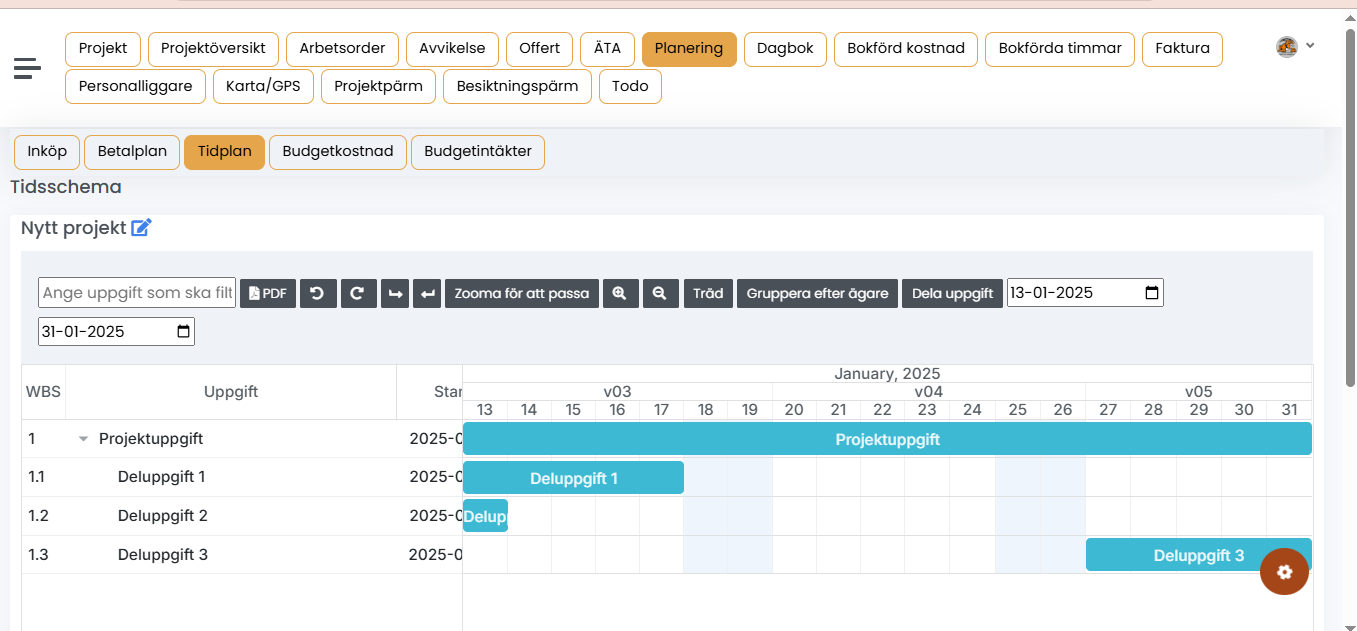
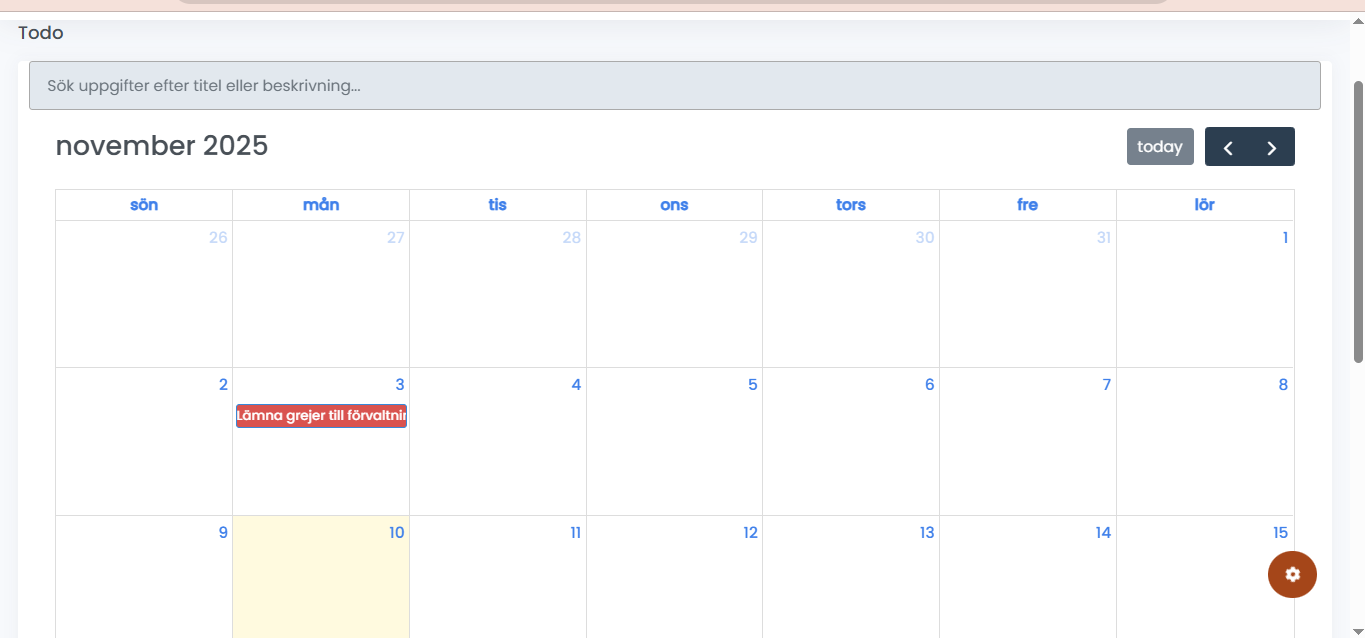
  • Project Management – Enables project creation, tracking, and reporting.
  • Inventory & Warehouse – Manages materials, equipment, and supplies.
  • Accounting & Budgeting – Controls expenses, payments, and invoices.
  • CRM & Client Management – Handles client interactions and supplier data.
  • Document Repository – Manages secure document upload, review, and sharing.
  • User & Role Management – Implements multi-level access based on organizational hierarchy.

Backend Functionality

  • RESTful API development for communication between frontend and backend.
  • Data validation and structured error handling.
  • Secure file upload and storage mechanisms.
  • Automated email and notification system for user alerts.
  • Report generation in downloadable formats (PDF/Excel).
  • System logging for performance tracking and debugging.

Secutiry Implementation

  • Role-based access control to prevent unauthorized access.
  • Encrypted storage of passwords and sensitive data.
  • Middleware protection on all API endpoints.
  • Input sanitization to avoid SQL Injection and XSS vulnerabilities.
  • CSRF protection on all form submissions.
  • Audit logs to maintain transparency in system activities.

Challenges Faced

  • Managing separate company data within a single system.
  • Optimizing complex database queries and reports.
  • Ensuring smooth operation during concurrent user access.
  • Maintaining synchronization between backend and frontend.
  • Designing a flexible role-based access and permission system.

Solutions Implemented

  • Used company-based data isolation to maintain separation across organizations.
  • Applied indexing and caching for query optimization.
  • Implemented Laravel Queues for background tasks such as reporting.
  • Built a custom role and permission model for access management.
  • Added pagination and eager loading for improved performance.

Performance & Testing

  • Conducted API testing using Postman and unit testing using PHPUnit.
  • Performed load and stress tests for multi-user stability.
  • Optimized database queries, improving response times by over 40%.
  • Managed large datasets without server timeouts.
  • Enhanced debugging and tracking using Telescope and log monitoring tools.

Results & Achivements

  • Achieved high backend reliability and scalability.
  • Improved database performance by 40%.
  • Reduced manual workload by 50% through automation.
  • Enhanced data security and transparency.
  • Established a strong foundation for future ERP module expansion.

Learning Outcomes

  • In-depth understanding of modular backend architecture and system design.
  • Advanced experience with database structuring and optimization techniques.
  • Improved knowledge of secure API development and data protection.
  • Strengthened debugging, testing, and error-handling skills.
  • Practical experience in deploying and maintaining a cloud-based application.

Future Enhancements

  • Implement real-time dashboards using Web Sockets for live project monitoring.
  • Introduce AI-powered analytics for predictive decision-making.
  • Develop a dedicated mobile app for field users and supervisors.
  • Integrate Power BI for advanced business intelligence and visualization.
  • Expand language and voice command support for greater accessibility.

Conclusion

The Dignet project successfully delivered a structured and scalable system for managing construction operations digitally.

It enhances operational efficiency, data accuracy, and real-time control across departments.

By integrating automation and intelligent analytics, the platform forms a solid foundation for continued innovation in digital project management.

Related Case Studies

We are here to help your every business need

We focus on the IT solutions, so you can focus on your business. See what we can do for you today!